Blog By : Cecile De Mello | Executive Director, Teamwork Englewood
 Some journeys don’t end when you board the plane home. They continue in the questions you carry, the history you feel, and the work you return to with renewed purpose.
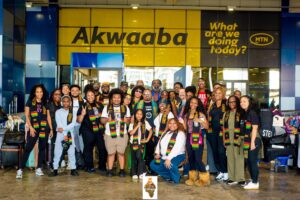
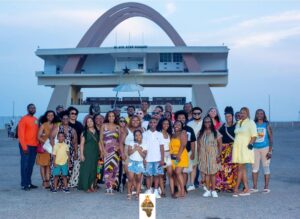
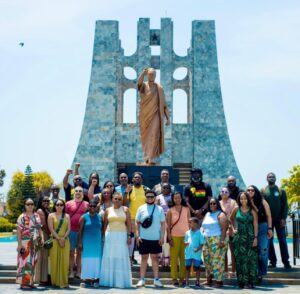
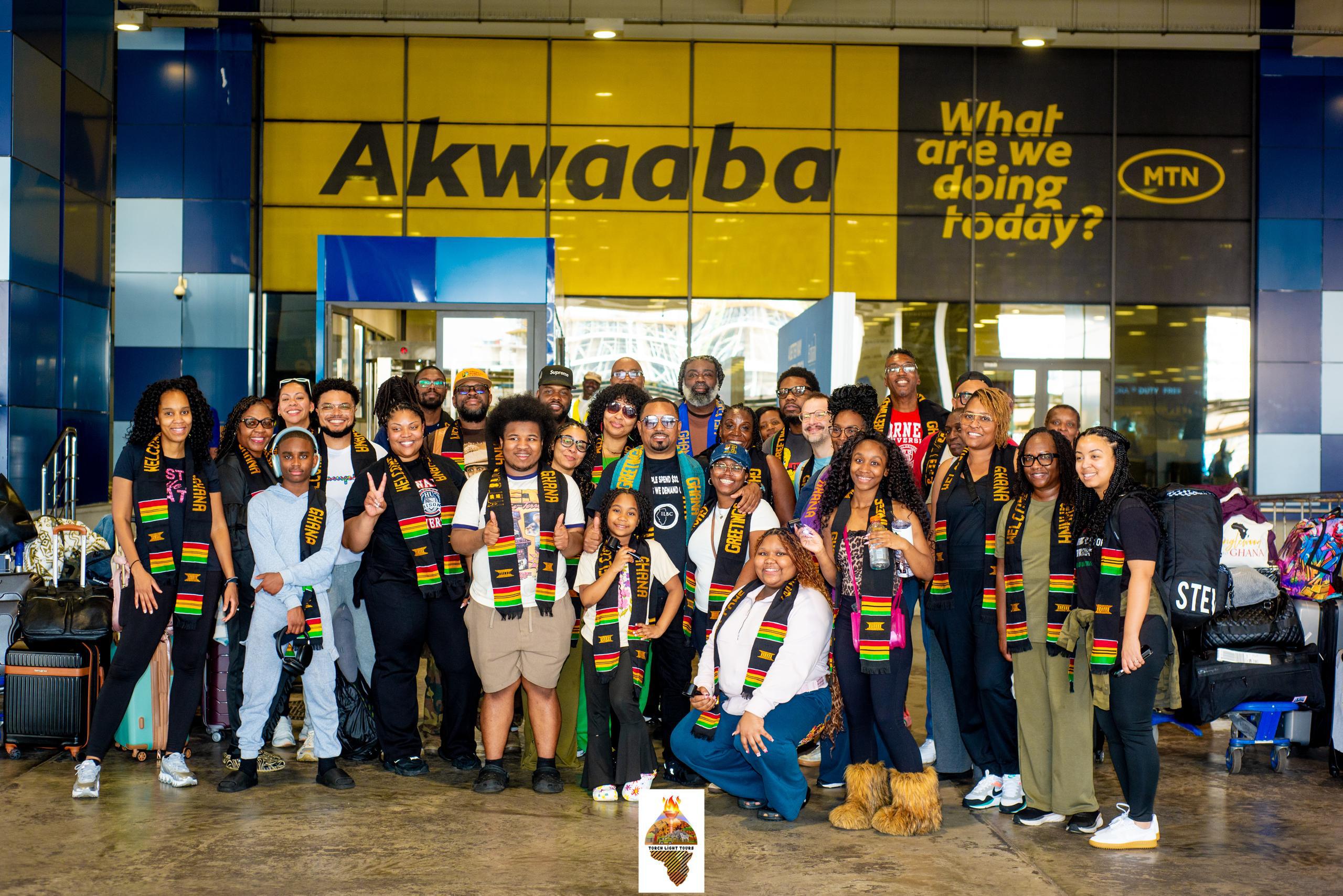
This past March, I traveled with a delegation of Englewood and South Side residents, community and business leaders, and elected officials to Ghana, Africa. Organized in collaboration with the Greater Englewood Chamber of Commerce and Illinois State Senator Willie Preston, the trip explored Afro-tourism, African business development, government, and economic development.
It was my first time visiting the continent of Africa.
As a descendant of the Transatlantic Slave Trade and American chattel slavery, I knew this trip would be emotional and spiritual. I am deeply interested in the liberation of Black people and the story of who we were before colonial oppression. That history has always been sacred to me. As an African American Studies minor at Temple University, I was exposed to an Afrocentric perspective that sparked a lifelong journey of learning African history.
Despite my studies and decades of work in community organizing and development in Black communities, I knew this trip would teach me things no book could. Experiencing Africa firsthand alongside our tour guide, Michael Orleans of Torch Light Tours, gave me far more to process than I imagined.
The feelings and chills were unreal once we landed. I felt rooted.
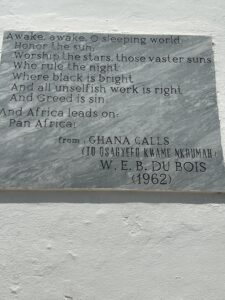
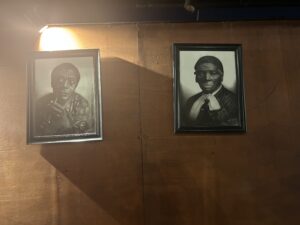
Our first destination was the W.E.B. Du Bois Museum. Du Bois devoted much of his life to the liberation of Black people in America and spent the final years of his life working toward liberation strategies in Africa. Seeing the museum and learning more about his work reminded us that our civil rights leaders are worldwide influencers. Throughout our journey, we saw Black civil rights leaders and abolitionists honored. One of the greatest highlights of the trip was recognizing our connected fight and the bold people who have helped lead it.
The story of W.E.B. Du Bois and African economic development reinforced the importance of education and economic liberation as central components of movement building. It also reminded me that there are many different ways to contribute to liberation efforts.
Our trip centered around the influence of Pan-Africanism on Ghana’s educational and economic development. It emphasized self-determination and shared agendas across countries, religions, and governments. While many of us are familiar with narratives about Africa’s economic struggles through mainstream media, hearing directly from people living those realities offered a much different perspective. We learned not only about internal challenges but also about the external political and economic interventions that continue to hinder the continent’s economic liberation.
Dr. Kwame Nkrumah, Ghana’s first president and a key architect of Pan-Africanism, was educated at an HBCU. I found that fact incredibly important. So much Black thought leadership and strategic planning happens in affirming Black spaces—but that’s a conversation for another day, lol.
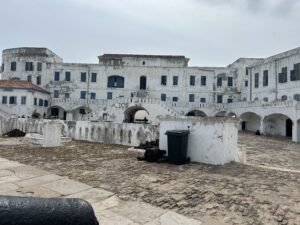
We also visited landmarks connected to chattel slavery, including the slave dungeons and the slave river. These places are filled with hot, still air. They feel heavy, sad, and serious. You find yourself asking so many questions: How did they survive? How could this happen?
What struck me most was that many of the surrounding communities also showed visible poverty. How can places central to one of the greatest thefts and atrocities in human history continue to struggle with economic stability while so much wealth was extracted from them for the benefit of others? It is something I am still processing.
I returned home more rooted in the work I am part of in Englewood and across Chicago. I want to continue creating spaces for self-determination, where residents co-create solutions, shape implementation, and build a shared agenda for improving our communities. The Quality of Life Plan continues to be one way I see this work taking shape.
Just as colonial powers extracted wealth and resources from African nations, many Black communities in Chicago have experienced decades of resource extraction through discriminatory housing policies, inequitable public investment, predatory lending, school closures, and uneven economic development. The parallels make the call for reparative policies and practices even more compelling.
The work of Englewood’s community groups, residents, and businesses continues to challenge these injustices and build collective power. I look forward to the next decade of planning—developing policy, programs, and community-led solutions rooted in the reparative work our neighborhoods deserve, in honor of our families on the continent who fought for their freedom and our continued fight for freedom here in Chicago.